Beyond the Commute

Temporal Ridership Patterns and Socioeconomic Stratification in London’s Underground Stations

Clara Peiret-García · Dennis N. Kimani · Esra Suel

17th April 2026

About this paper

Motivation and Background

Travel patterns (commuting) are the origin of many transport policies...

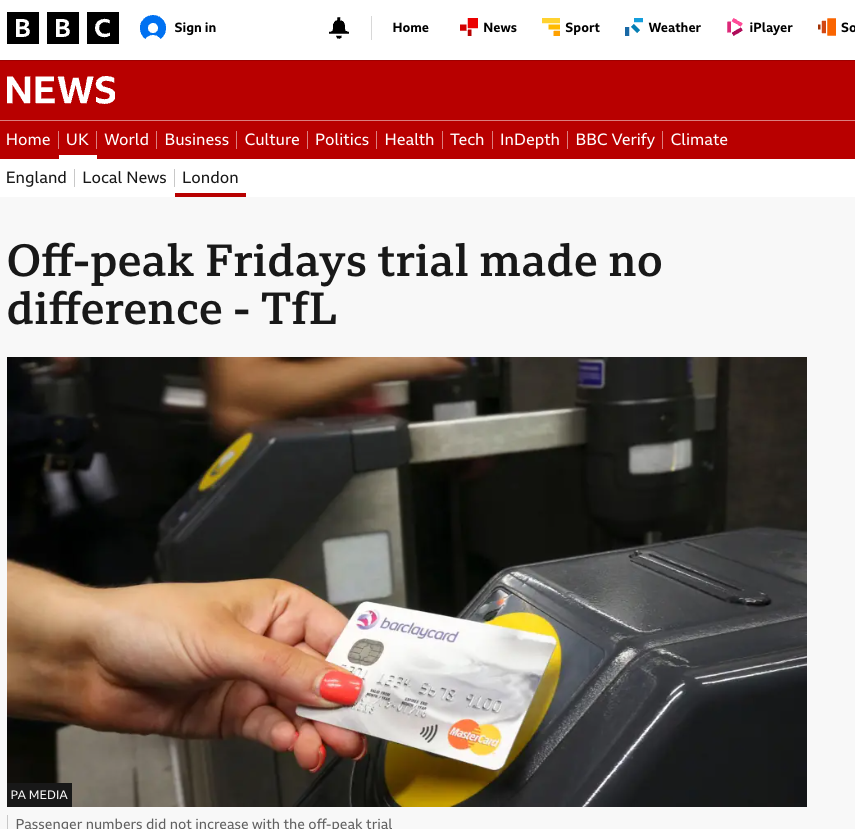
...but those patterns are changing.

Are these global trends equally distributed?

But, who is travelling?

We don't know.

  • Demographics
  • Socioeconomic
  • Employment
  • Urban function

Results

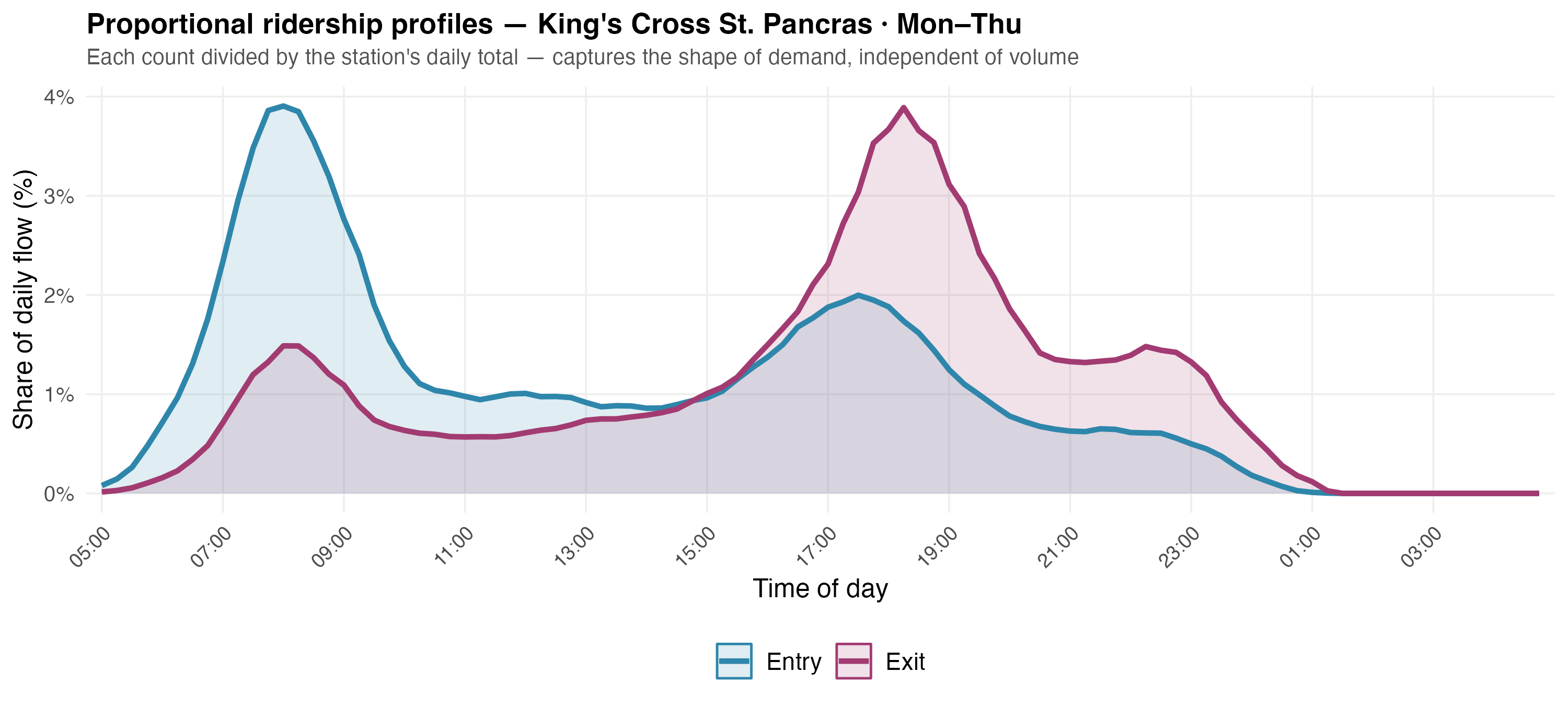
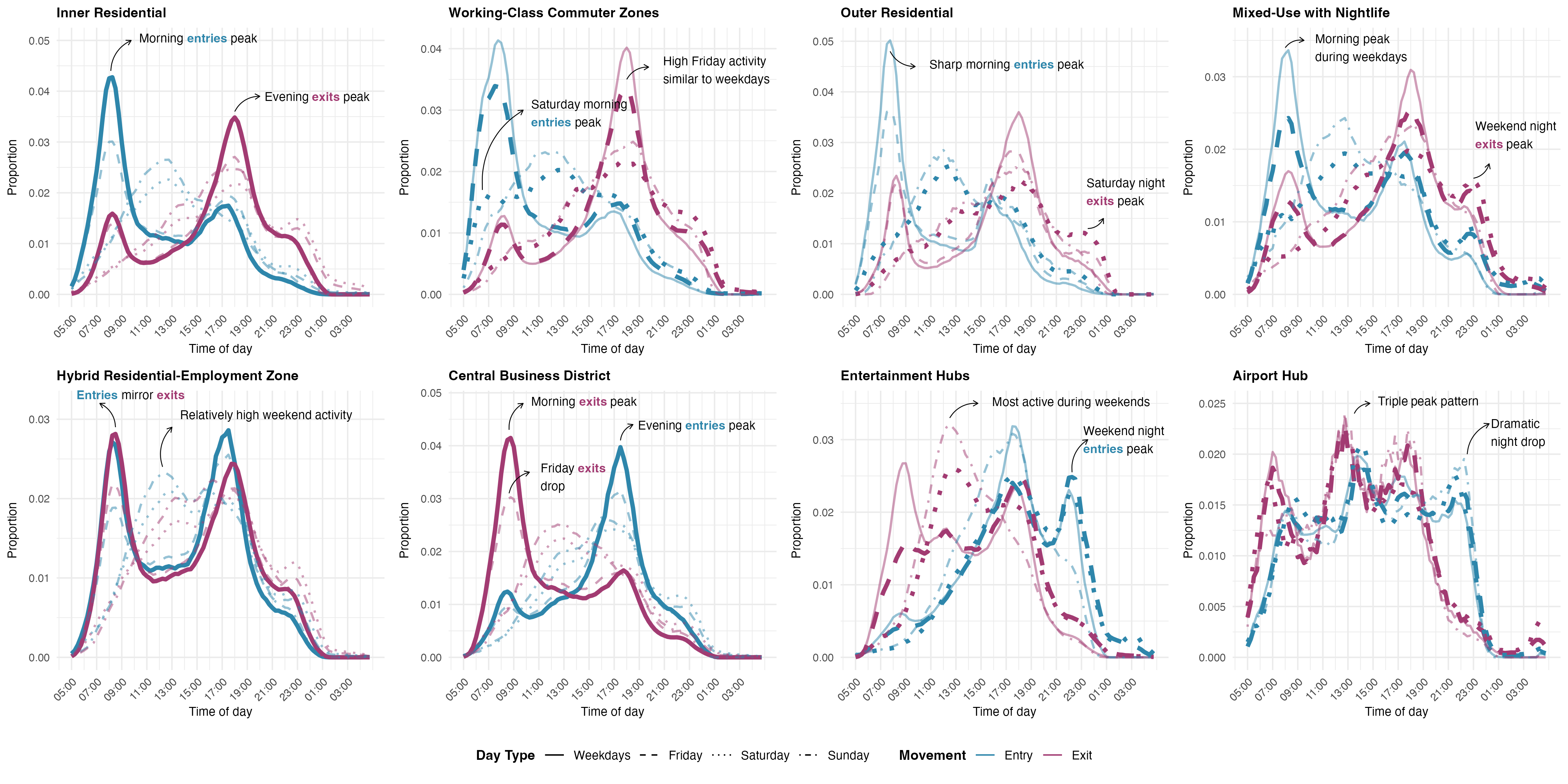
Temporal ridership profiles

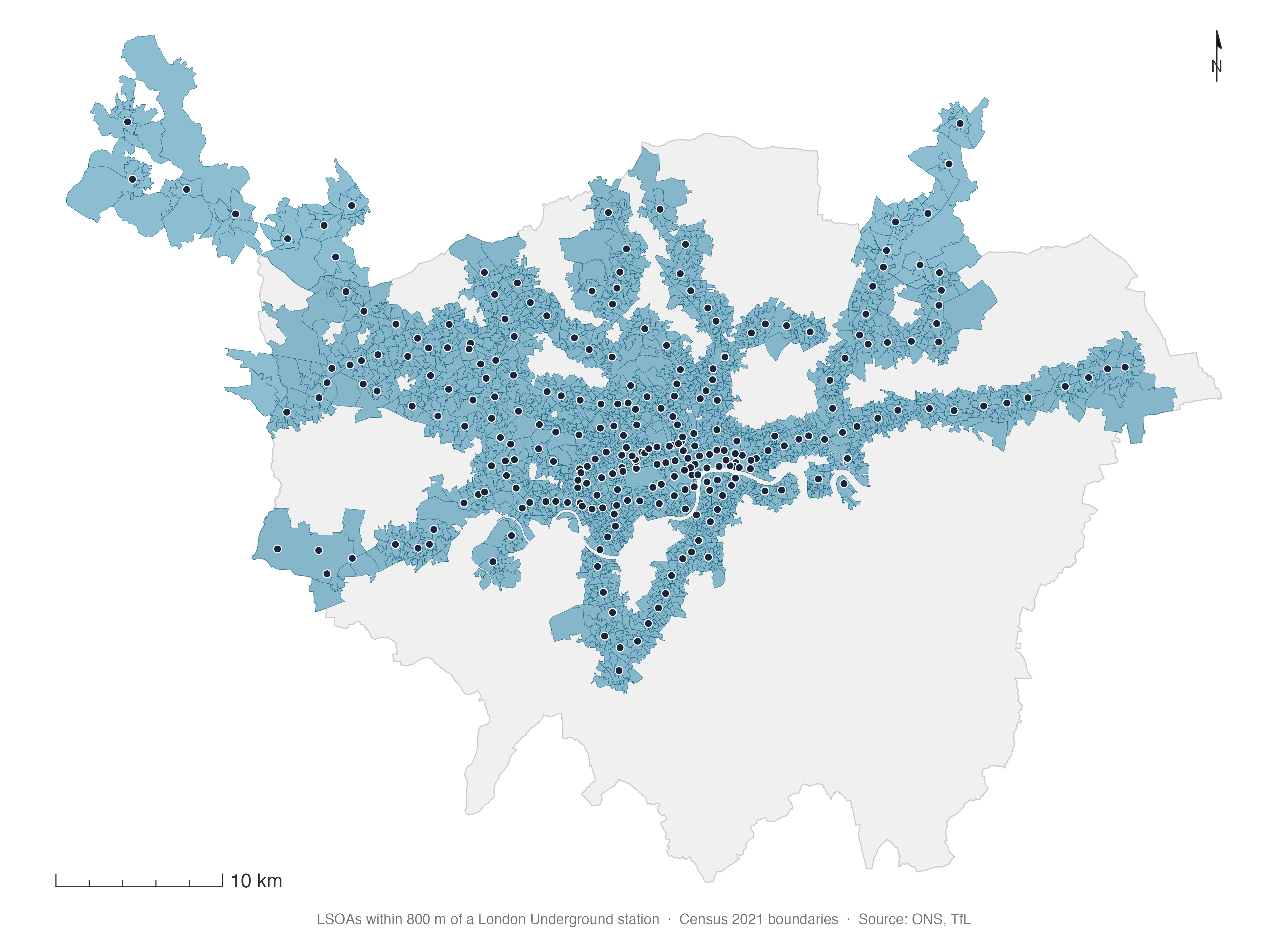
Spatial distribution of clusters

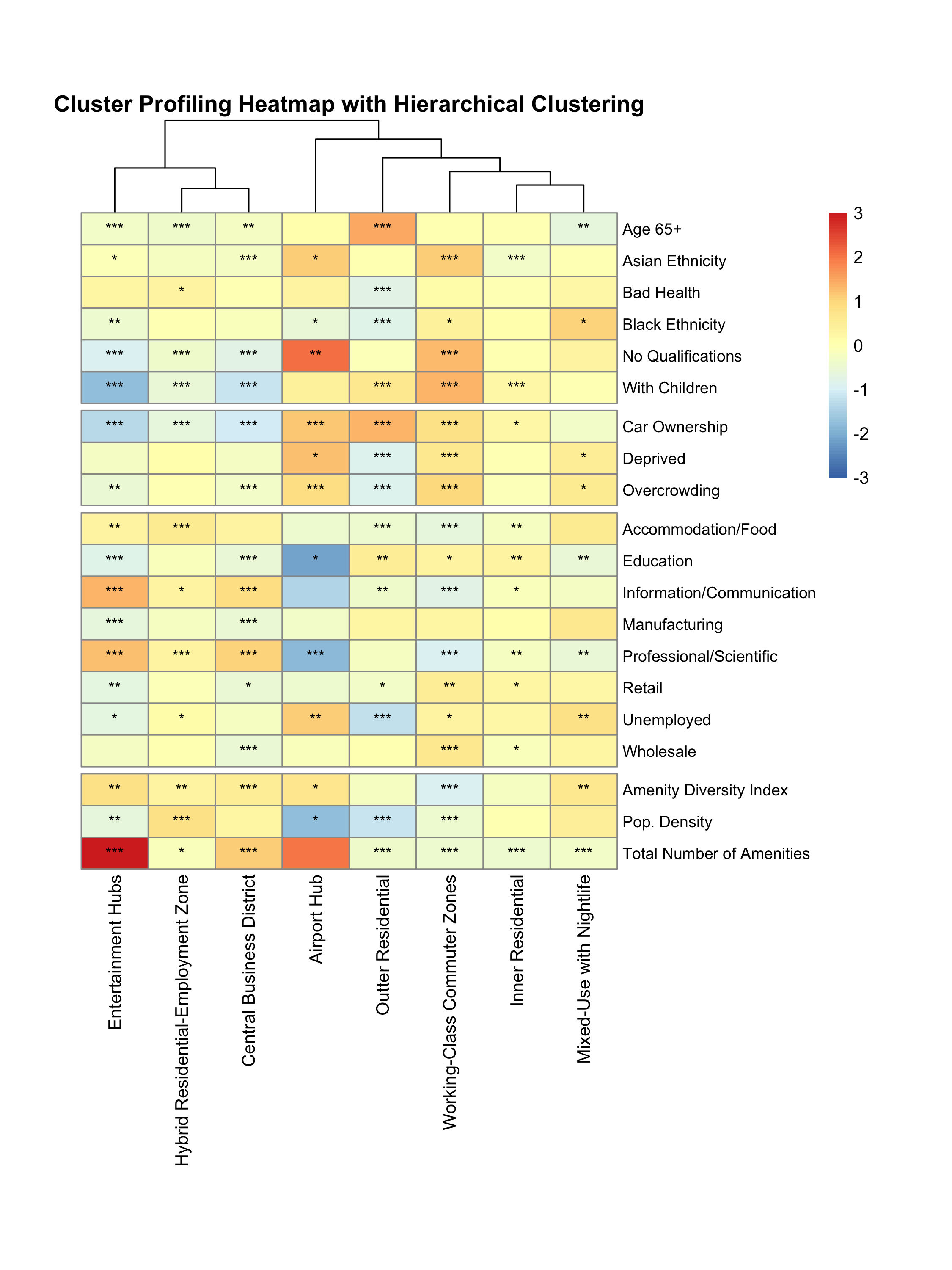
Cluster contextual factors

Discussion and Conclusions

Explicitly incorporating a weekday/weekend divide adds more nuance to the clusters.

More deprived households are linked to greater off-peak travel, and less schedule autonomy.

Policy-makers should carefully evaluate behaviours beyond global trends before implementing policies.

Limitations

  • We focused on the London Underground network – can be extended to the full TfL network.

  • Tap ins/tap outs occur at the LU station, but this might be only an intermediate step to get to the final destination.

Questions?

e: c.peiret-garcia@ucl.ac.uk

w: cpeiretgarcia.github.io

w: citymodellinglab.uk

slides

References

Alonso, William. 1964. Location and Land Use: Toward a General Theory of Land Rent. Harvard university press.
Cheon, Seung Hoon, Changju Lee, and Seongil Shin. 2019. “Data-Driven Stochastic Transit Assignment Modeling Using an Automatic Fare Collection System.” Transportation Research Part C: Emerging Technologies 98: 239–54.
Edwards, T. 2025. “Off-Peak Fridays Trial Made No Difference - TfL.” BBC News, August.
Fong, Amy Z, and F Atiyya Shaw. 2024. “Well-Being Implications of Mobility of Care: Gender Differences Among US Adults.” Transportation Research Part D: Transport and Environment 129: 104109.
Sánchez de Madariaga, Inés, and Elena Zucchini. 2019. “Measuring Mobilities of Care, a Challenge for Transport Agendas.” Integrating Gender into Transport Planning: From One to Many Tracks, 145–73.
Transport for London. 2025. “Annual Report 2024/2025.” London: Transport for London.

← Back to website